

An Amazon returnless refund lets a customer receive a refund without sending the item back. For sellers, the decision comes down to whether recovering the product is worth the return shipping, handling and resale costs.
NRF and Happy Returns projected that US retail returns would total $849.9 billion in 2025, with 19.3% of online sales returned. Newer research highlights the customer side of that challenge: DHL’s 2026 eCommerce Trends Report found that 63% of surveyed US shoppers would abandon their cart without their preferred return options. These findings concern returns generally, not Amazon returnless refunds. For brands, the practical question is where a simpler refund process makes financial sense and where recovering the product is still worth the cost.
This comprehensive guide covers everything you need to know about Amazon’s returnless refund system, from basic eligibility requirements to advanced strategies that can transform your return management approach in 2026.
What Does a Returnless Refund on Amazon Mean?
Amazon Returnless Refund is a customer-friendly policy that allows buyers to receive full refunds without physically returning the purchased item. This program is designed to make it easier for customers to get a refund for items they are not satisfied with, while simultaneously helping sellers avoid costly return processing for low-value or difficult-to-ship products.
Under this innovative system, customers can get Amazon refund without returning item in specific circumstances, creating a win-win situation for both parties. The customer keeps the product and receives their money back, while sellers avoid expensive shipping costs and restocking fees.
Key Features of Amazon Returnless Refund
For Customers:
- Refunds without a return shipment; payment timing varies.
- No need to package and ship items back
- Keep the original product
- Simplified return experience
For Sellers:
- Reduced return shipping costs
- Less inspection and restocking work for refunded items.
- Faster customer satisfaction resolution
- Protection from unsellable returned merchandise
Amazon Returnless Refund Policy: What Applies in 2026
Amazon introduced significant changes to its return policy in 2025-2026, giving sellers unprecedented control over returnless refunds. Here are the most important updates every seller needs to know:
New Seller Controls (2026)
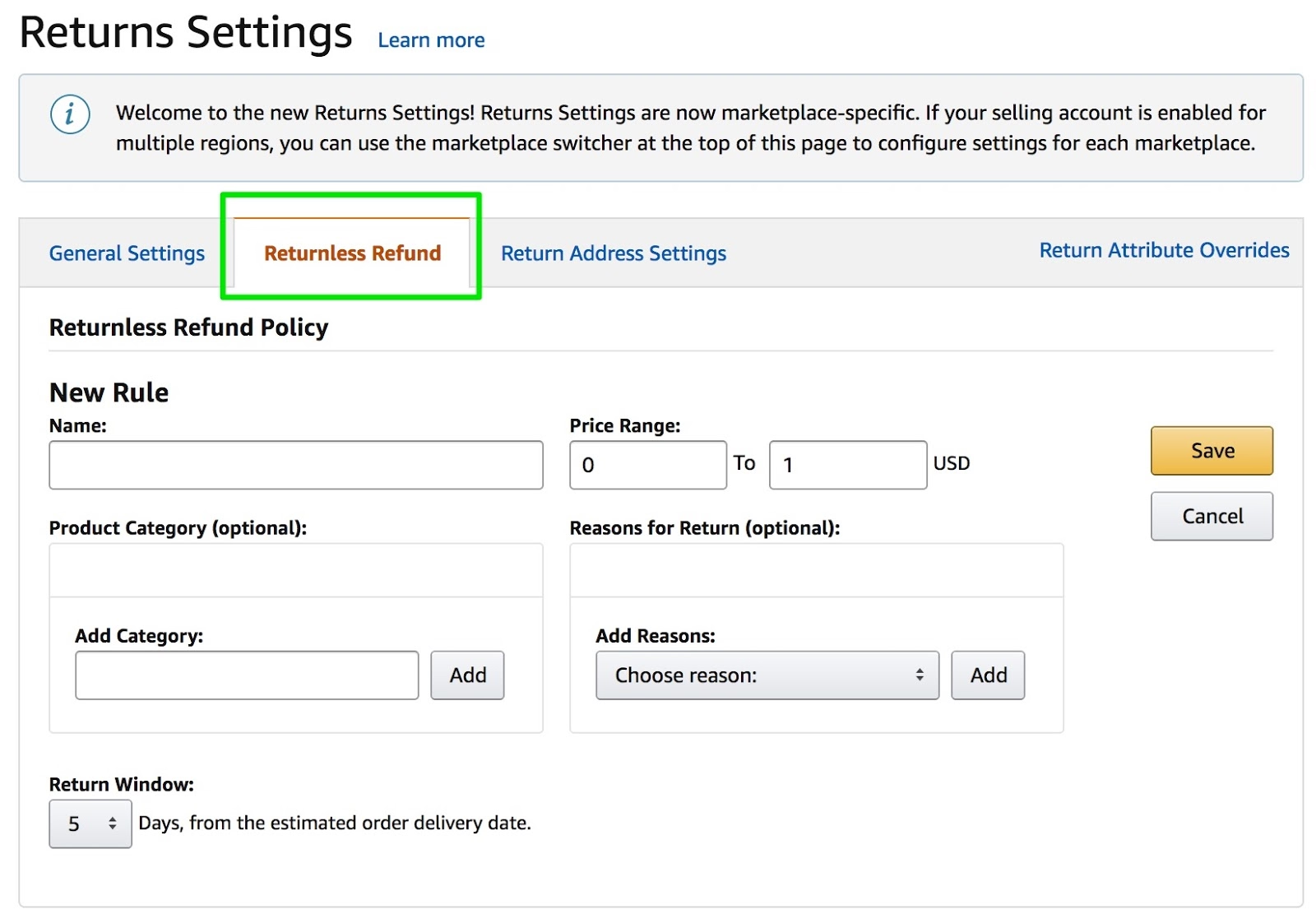
Enhanced Rule Customization: Sellers fulfilling their own orders can specify returnless refund rules in Seller Central based on price range, product category, and return reason.
Return Processing Fees:
Amazon now charges sellers with high return rates (except apparel and shoes) additional processing fees. This makes returnless refunds even more attractive for eligible products.
FBA Inventory Management:
Sellers can now choose to automatically return or dispose of unsellable items through FBA inventory evaluation settings, providing better control over inventory costs.
Third-Party Seller Expansion
As of September 8, 2026, Amazon’s US FBA Returnless Resolutions program allows sellers to enroll eligible products by setting a maximum item price between $1 and $75 or selecting specific ASINs. Amazon checks product and customer eligibility, so a product priced below $75 does not automatically qualify. There is no additional participation fee, but sellers cannot claim inventory reimbursement for items customers keep through the program.
How to Get Amazon Refund Without Returning Item
For Customers: Step-by-Step Process
- Check Eligibility
- Item must be sold by Amazon.com or participating marketplace sellers
- Check the return options and deadline shown for your specific order. Eligibility depends on the product, seller and applicable policy. Describe damage or defects accurately when submitting the request.
- Contact Amazon Customer Service
- Go to „Your Orders“ in your Amazon account
- Select „Return or Replace Items“ next to the eligible product
- Choose your reason for the return
- Follow prompts for returnless refund (if available)
- Alternative Method
- Contact Amazon customer service directly
- Explain your situation clearly
- Allow Amazon to determine eligibility
When Amazon Offers Returnless Refunds Automatically
Amazon employs various algorithms and policies to determine which products are eligible for returnless refunds, considering factors such as the product’s cost, type, return history, and customer feedback.
Common Scenarios:
- Low-cost items (typically under $20-30)
- Damaged items reported by customers
- Items from sellers with returnless refund rules enabled
Amazon Returnless Refund Items: Which Products Qualify
Eligibility depends on the fulfillment program and order. The US FBA Returnless Resolutions program excludes dangerous goods, recalled products, gift cards, heavy or bulky items, non-returnable items, and products with an average sales price above $75. A lower price does not guarantee eligibility.
For seller-fulfilled orders, check the seller’s configured rules and the applicable return policy. Non-returnable does not always mean non-refundable.
Complete Setup Guide for Sellers
Method 1: Setting Returnless Refund Rules in Seller Central
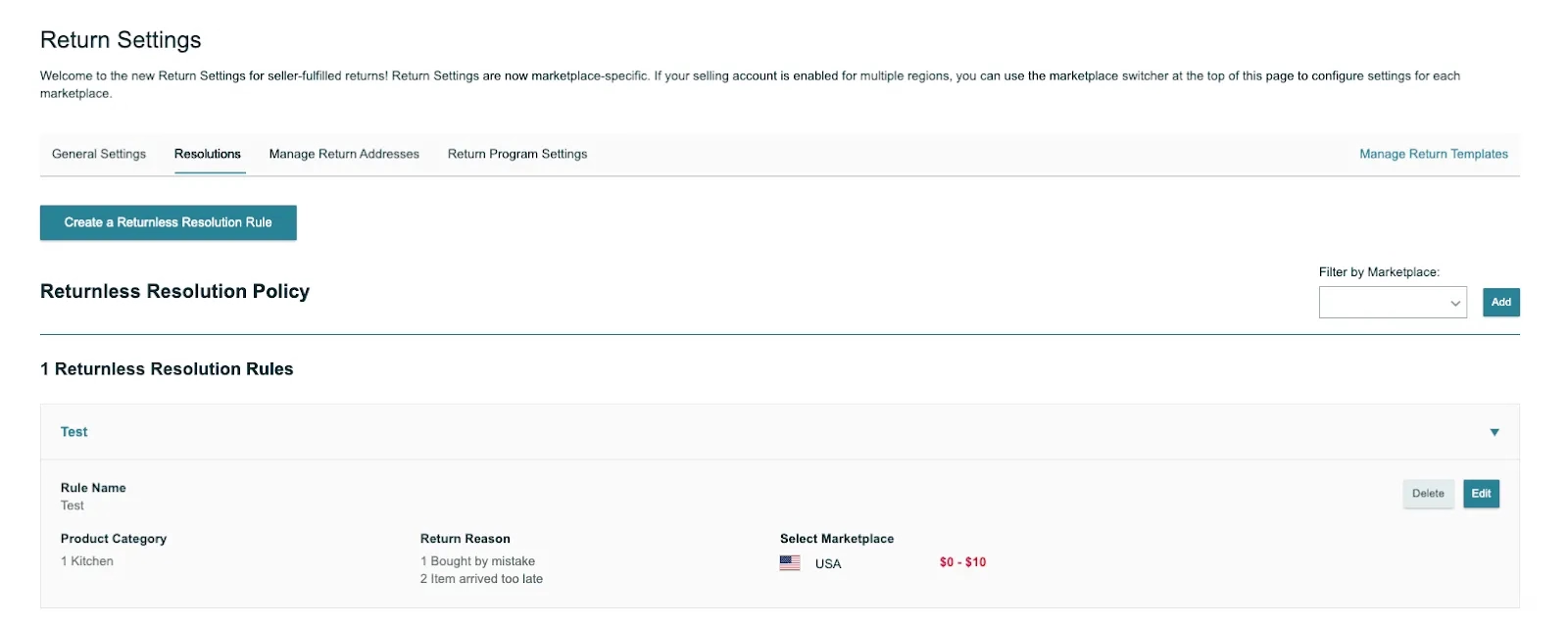
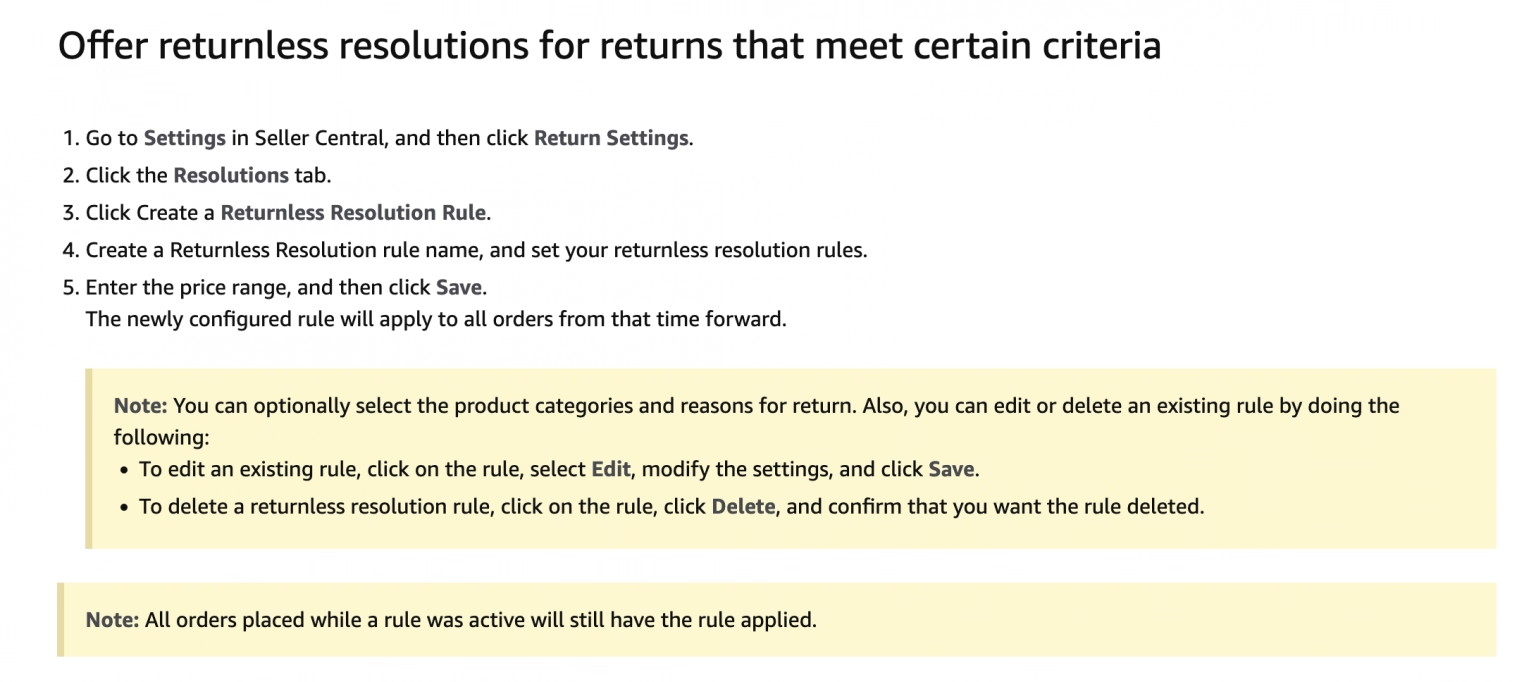
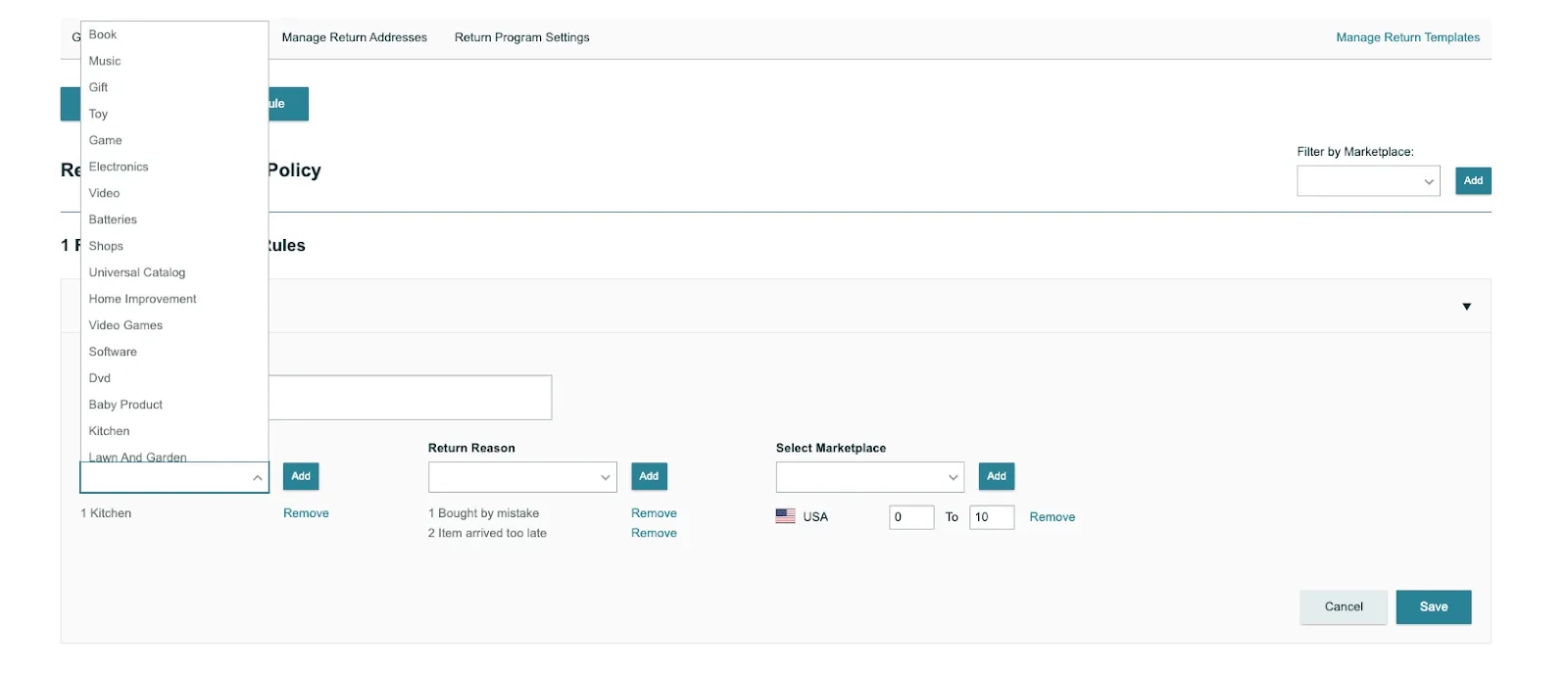
For seller-fulfilled orders, open Return Settings → Resolutions. Select “Create a returnless resolution rule,” enter the rule name and price range, add product categories and return reasons where appropriate, then save.
Method 2: Product-Specific Setup
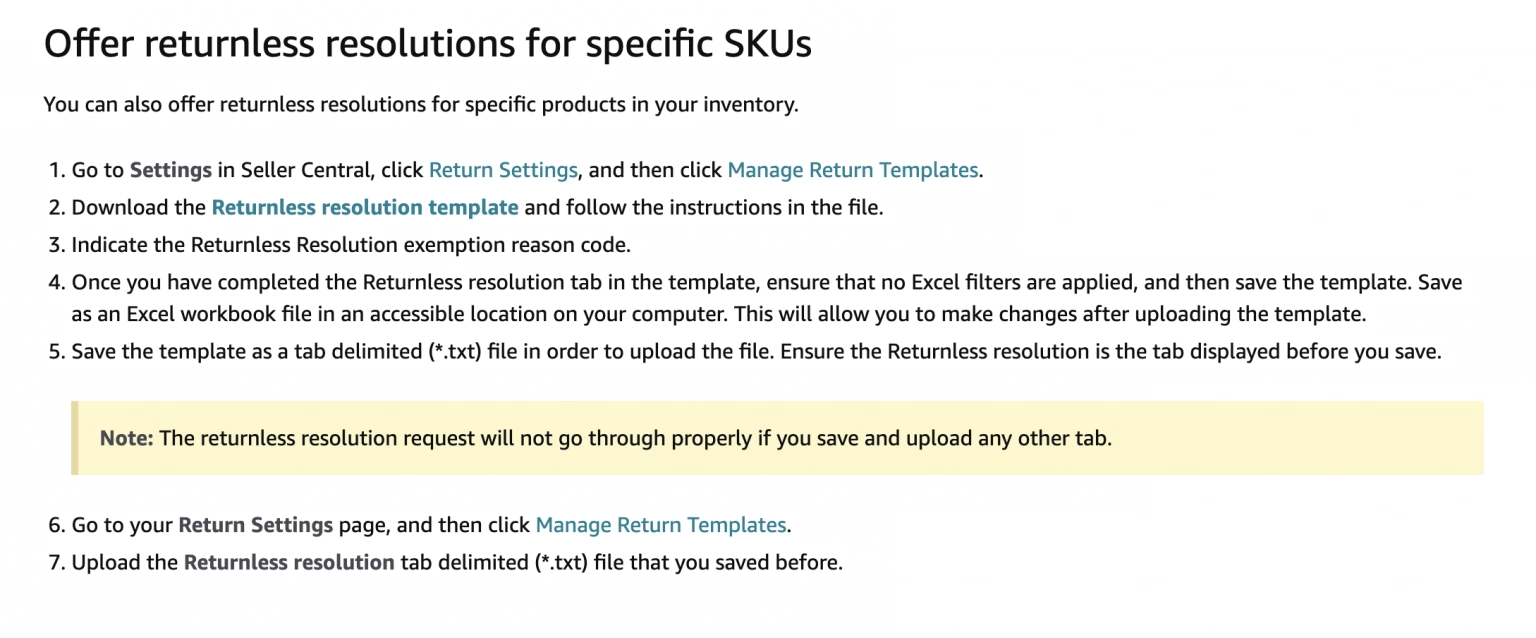
For seller-fulfilled SKU enrollment, open Return Settings → Manage return templates. Download the Returnless resolution template, enter the selected SKUs and upload the completed tab-delimited file.
Method 3: Bulk Configuration
For FBA enrollment, open FBA Settings → FBA returns evaluation & ownership settings → Returnless Resolutions. Choose ASIN-based enrollment or enable enrollment by price, enter the maximum item price and select Update.
Pros and Cons Analysis
Advantages for Amazon Sellers
Cost Reduction
- Eliminate Return Shipping Costs: With the Amazon Returnless Refund, you can skip these costly shipping requirements altogether, especially for products that aren’t worth returning
- Lower Handling Costs: When the item does not come back, it does not need to be inspected or restocked. Other applicable Amazon fees can still affect the order’s profitability.
- Reduce Labor Costs: Eliminate time spent inspecting and restocking returned merchandise
Operational Efficiency
- Refund Timing: Returnless refunds remove the return-shipping step, but payment timing depends on the refund method. After Amazon issues a refund, its US guidance lists approximately 3 to 5 business days for credit cards and 2 to 3 hours for Amazon.com Gift Card balances.
- Improved Customer Satisfaction: Allowing your customers to skip the hassle of repackaging and shipping their returned item to get their refund even faster bodes well for their impression of your company
- Environmental Benefits: By implementing the Amazon Returnless Refund, your company can participate in sustainable logistics practices by cutting carbon emissions from transportation and reducing landfill waste
Strategic Benefits
- Enhanced Brand Image: Position your business as customer-centric and environmentally conscious
- Competitive Advantage: Stand out from competitors who don’t offer returnless refunds
- Return-Rate Visibility: FBA returnless resolutions still count toward the ASIN’s average return rate, even though the item does not come back.
Potential Disadvantages
Financial Risks
- Lost Inventory: Items are not returned, representing a complete loss of the product
- Fraud Vulnerability: Amazon checks eligibility and monitors refund requests for abuse. Approval for one order does not guarantee that future requests will receive the same outcome.
- Profit Erosion: Multiple returnless refunds can significantly impact margins
Business Impact Examples
- Coupon Example: A $40 item purchased with a 20% seller-funded coupon costs the customer $32 before tax. A full merchandise refund returns that $32 to the customer, leaving no merchandise sales revenue from the order. This is an illustrative calculation, not an Amazon fee estimate.
- High Return Rate Costs: Under Amazon’s 2026 US FBA fee guidance, a returns processing fee applies to returned units above the product’s category-specific return-rate threshold. Apparel and shoes follow separate returns processing fee rules; they are not universally exempt from return fees. For FBA Returnless Resolutions, Amazon does not charge the high return rate fee, but those resolutions still count toward the ASIN’s average return rate.
Risk Mitigation Strategies
Monitor Return Patterns
- Track return rates by product category
- Identify customers with suspicious return behavior
- Analyze seasonal return trends
Smart Rule Configuration
- Set appropriate price thresholds for returnless refunds
- Limit eligibility to specific product categories
- Implement return reason restrictions
Customer Communication
- Provide detailed product descriptions to reduce returns
- Use high-quality images and videos
- Offer excellent customer service to resolve issues before returns
Advanced Strategies for 2026
Leveraging Amazon’s AI for Return Decisions
Amazon employs various algorithms and policies to determine which products are eligible for returnless refunds, analyzing data and monitoring buyer/seller interactions to provide the best possible experience. Smart sellers can align their strategies with these algorithms by:
Data-Driven Decision Making
- Analyze historical return data for each SKU
- Calculate true return costs including shipping, restocking, and disposal
- Identify products where returnless refunds save money.
- Fewer packages coming back does not necessarily mean lower refund costs.
- Compare what each returned product could recover through resale or salvage with the additional cost of shipping, inspecting and repacking it.
- For example, an item that could recover $12 after resale costs and requires $8 in return shipping and handling still offers $4 of recovery. Making it returnless gives up that value. This example assumes the customer receives the same refund either way.
- Review refund reasons alongside these costs. When items no longer come back for inspection, recurring packaging or supplier problems can become harder to investigate.
Dynamic Pricing Strategy
- Build return costs into product pricing
- Use competitive analysis to justify higher prices
- Implement dynamic pricing based on return rates
Integration with Broader Business Strategy
Customer Lifetime Value Optimization
- Use returnless refunds to retain high-value customers
- Implement tiered refund policies based on customer history
- Create loyalty programs that incorporate return benefits
Inventory Management Integration
- Coordinate returnless refund policies with inventory turnover rates
- Use returnless refunds to clear slow-moving inventory
- Implement seasonal adjustments for return policies
2026 Market Trends to Watch
Increased Competition More retailers are adopting returnless refund policies as they look for ways to cut the costs associated with returns. This trend will likely accelerate in 2026, making returnless refunds a competitive necessity rather than a differentiator.
Sustainability Focus Environmental concerns are driving both consumer behavior and platform policies. Returnless refunds align with sustainability goals by reducing unnecessary transportation and packaging waste.
Conclusion: Making Returnless Refunds Work for Your Business
Amazon’s returnless refund system has evolved into a sophisticated tool that, when used strategically, can significantly benefit both sellers and customers. The 2026 policy updates have given sellers unprecedented control over when and how these refunds are processed, making it more important than ever to have a well-thought-out strategy.
Key Takeaways:
- Strategic Implementation is Crucial: Don’t enable returnless refunds across your entire catalog. Instead, analyze each product category and SKU to determine where it makes financial sense.
- Monitor and Adjust: For seller-fulfilled orders, Seller Central allows you to specify returnless refund rules based on price range, product category, and return reason. Review these settings regularly to keep them aligned with your products and return costs.
- Customer Experience Matters: While protecting your bottom line is important, remember that returnless refunds can significantly improve customer satisfaction and loyalty when implemented thoughtfully.
- Stay Informed: Amazon’s policies continue to evolve. Regular review of your returnless refund strategy ensures you’re taking advantage of new opportunities while mitigating emerging risks.
The returnless refund system represents Amazon’s commitment to customer satisfaction while providing sellers with tools to manage costs effectively. By understanding how to leverage this system properly, you can create a competitive advantage that benefits both your business and your customers.
Need Expert Help with Your Amazon Strategy?
Returns deserve the same attention as inventory, fees and account performance. Explore Sequence Commerce’s Amazon account management services to see how these decisions fit into your wider marketplace strategy.
Frequently Asked Questions
What Is an Amazon Returnless Refund?
An Amazon returnless refund lets a customer receive a refund without sending the purchased item back. Amazon or the seller confirms that the customer can keep it. Eligibility depends on the product, order and applicable policy.
How Do I Get a Returnless Refund on Amazon?
Go to Your Orders, select Return or Replace Items where available, and explain the issue accurately. Follow the instructions provided. A returnless refund is approved only when Amazon or the seller confirms no return is required.
What Products Are Eligible for Returnless Refunds?
Eligibility varies. The US FBA Returnless Resolutions program excludes dangerous goods, recalled products, gift cards, heavy or bulky goods, non-returnable items, and products with an average sales price above $75. Lower prices do not guarantee eligibility.
How Long Does an Amazon Returnless Refund Take?
After Amazon issues the refund, US guidance lists 3 to 5 business days for credit cards and 2 to 3 hours for Amazon.com Gift Card balances. Check your order for its expected refund date.
Is There an Amazon Returnless Refund Limit?
Amazon’s published guidance does not specify a fixed customer allowance for returnless refunds. Eligibility is checked for each request, and Amazon monitors refund activity for abuse. Approval on one order does not guarantee approval on another.
Can I Opt Out of Returnless Refunds as a Seller?
You can disable FBA enrollment or remove seller-fulfilled rules. Amazon may still issue automatic returnless refunds for eligible returns of $25 or less when orders ship from outside the US without a default US return address.
What Happens if I Receive a Returnless Refund I Didn’t Authorize?
Review the order’s fulfillment method, returnless settings and return-address arrangements. Ask Seller Support which policy triggered the refund. Do not assume reimbursement is available: voluntary FBA returnless resolutions are not eligible for inventory reimbursement.
How Do Returnless Refunds Affect My Seller Metrics?
FBA returnless resolutions count toward an ASIN’s average return rate, although the high return rate fee is not charged for those resolutions. Avoiding the physical return does not remove the return event from that calculation.
Should I Use Returnless Refunds for All My Products?
No. Compare the value you could recover from each returned product with the additional shipping, inspection and resale costs. Use returnless refunds selectively when recovering the item would cost more than its expected recovery value.

Jake Gilbert serves as the Chief Revenue Officer (CRO) at Sequence Commerce, where he spearheads all lead generation initiatives and drives the agency’s growth strategy. With a keen analytical mindset, Jake transforms complex marketplace data into actionable insights that deliver measurable results for clients. His expertise spans conversion rate optimization, customer acquisition funnels, and performance marketing specifically tailored to Amazon and e-commerce ecosystems.
At Sequence Commerce, Jake has developed proprietary reporting frameworks that accurately track and attribute revenue across multiple marketing channels, allowing clients to optimize their ad spend with precision. His data-driven approach to revenue optimization has helped numerous brands scale their Amazon presence while maintaining profitable growth metrics. Jake regularly analyzes emerging marketplace trends and platform algorithm changes to refine client strategies and maintain competitive advantages in the increasingly complex e-commerce landscape.
Before joining Sequence Commerce, Jake built successful sales operations for SaaS companies targeting the e-commerce sector, giving him unique insights into both the technical and strategic aspects of online selling. He holds certifications in advanced analytics and digital marketing, and frequently shares his expertise through the Sequence Commerce blog and industry webinars.